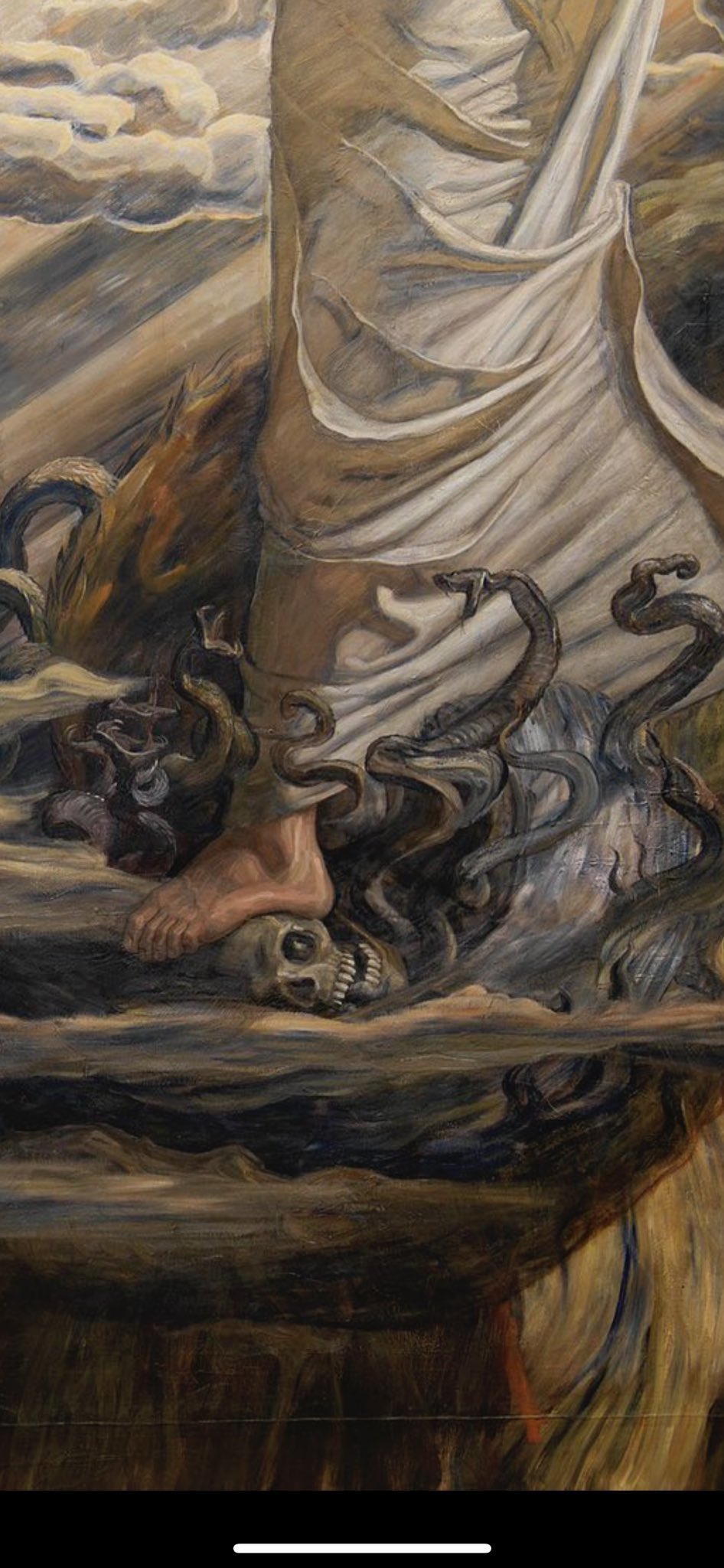
On the Incarnation of the Word IV
You may be wondering why we are discussing the origin of men when we set out to talk about the Word’s becoming Man. The former subject is relevant to the latter for this reason: it was our sorry case that caused the Word to come down, our transgression that called out His love for us, so that He made haste to help us and to appear among us. It is we who were the cause of His taking human form, and for our salvation that in His great love He was both born and manifested in a human body. For God had made man thus (that is, as an embodied spirit), and had willed that he should remain in incorruption. But men, having turned from the contemplation of God to evil of their own devising, had come inevitably under the law of death. Instead of remaining in the state in which God had created them, they were in process of becoming corrupted entirely, and death had them completely under its dominion. For the transgression of the commandment was making them turn back again according to their nature; and as they had at the beginning come into being out of non-existence, so were they now on the way to returning, through corruption, to non-existence again. The presence and love of the Word had called them into being; inevitably, therefore when they lost the knowledge of God, they lost existence with it; for it is God alone Who exists, evil is non-being, the negation and antithesis of good. By nature, of course, man is mortal, since he was made from nothing; but he bears also the Likeness of Him Who is, and if he preserves that Likeness through constant contemplation, then his nature is deprived of its power and he remains incorrupt. So is it affirmed in Wisdom: “The keeping of His laws is the assurance of incorruption.” And being incorrupt, he would be henceforth as God, as Holy Scripture says, “I have said, You are gods and sons of the Highest, all of you: but you die as men and fall as one of the princes.”
Translations
Nípa Ìsọ̀dí-Ènìyàn Ọ̀rọ̀ náà IV
Ó lè jẹ́ pé o ń ṣe kàyéfì pé kí ló dé tí a fi ń sọ̀rọ̀ nípa ìpilẹ̀ṣẹ̀ ènìyàn nígbà tí a pinnu láti sọ̀rọ̀ nípa bí Ọ̀rọ̀ náà ṣe di Ènìyàn. Kókó àkọ́kọ́ náà ní ìbáṣepọ̀ pẹ̀lú èkejì yìí nítorí pé ìbànújẹ àti ipò wa tí ó kún fún àánú ló mú kí Ọ̀rọ̀ náà sọ̀kalẹ̀; ìrékọjá wa ló sì fa ìfẹ́ Rẹ̀ sí wa, tí ó sì mú kí Ó yára wá ràn wá lọ́wọ́ kí Ó sì fara hàn láàárín wa. Àwa gan-an ni a jẹ́ ìdí tí Ó fi gba ìrísí ènìyàn, àti nítorí ìgbàlà wa ni Ó fi, nínú ìfẹ́ Rẹ̀ tí ó pọ̀, bí a sí fi ara ènìyàn hàn. Nítorí Ọlọ́run dá ènìyàn báyìí (èyí ni pé, gẹ́gẹ́ bí ẹ̀mí tí a fi ara wọ̀), ó sì fẹ́ kí ó máa wà nínú àìbàjẹ́. Ṣùgbọ́n àwọn ènìyàn, nígbà tí wọ́n yí ojú wọn kúrò ní ìrònú àti ìṣàrò lórí Ọlọ́run sí ibi tí àwọn fúnra wọn rò, wọ́n ṣubú láìyẹ̀ sí abẹ́ òfin ikú. Dípò kí wọ́n dúró nínú ipò tí Ọlọ́run dá wọn sí, wọ́n bẹ̀rẹ̀ sí í bàjẹ́ pátápátá, ikú sì gba àṣẹ lórí wọn pátápátá. Nítorí pé ìrékọjá òfin náà ń mú wọn padà sí ìwà àdánidá wọn; gẹ́gẹ́ bí wọ́n ti wá sí ìwàláàyè láti inú àìsí ní ìbẹ̀rẹ̀, bẹ́ẹ̀ náà ni wọ́n ń padà, nípasẹ̀ ìbàjẹ́, sí inú àìsí lẹ́ẹ̀kansi.
Wíwàníhìn-ín àti ìfẹ́ Ọ̀rọ̀ náà ló mú wọn wá sí ìwàláàyè; nítorí náà, nígbà tí wọ́n pàdánù ìmọ̀ Ọlọ́run, wọ́n tún pàdánù ìwàláàyè pẹ̀lú rẹ̀. Nítorí Ọlọ́run nìkan ṣoṣo ni Ẹni tí ó wà ní tòótọ́; ibi sì jẹ́ àìsí, ìkọ̀ àti àtakò ohun rere. Ní ti ìwà àdánidá, ènìyàn jẹ́ ẹni tí ó lè kú, nítorí a dá a láti inú asán. Ṣùgbọ́n ó tún ru Àwòrán Ẹni Tí Ó Wà; bí ó bá sì pa Àwòrán náà mọ́ nípasẹ̀ ìṣàrò àti ìfọkànsìn lórí Ọlọ́run nígbà gbogbo, agbára ìwà àdánidá rẹ̀ láti bàjẹ́ yóò di aláìníṣẹ́, yóò sì máa wà nínú àìbàjẹ́.
Gẹ́gẹ́ bí a ti fi í múlẹ̀ nínú Ìmọ̀ Ọgbọ́n pé: “Mímú àwọn òfin Rẹ̀ ni ìdánilójú àìbàjẹ́.” Níwọ̀n bí ó bá sì wà nínú àìbàjẹ́, yóò jẹ́ bí Ọlọ́run láti ìgbà náà lọ, gẹ́gẹ́ bí Ìwé Mímọ́ ṣe wí pé: “Èmi ti sọ pé, ‘Ẹ̀yin jẹ́ àwọn ọlọ́run, ẹ sì jẹ́ ọmọ Ẹni Gíga Jùlọ, gbogbo yín; ṣùgbọ́n ẹ ó kú bí ènìyàn, ẹ ó sì ṣubú bí ọ̀kan lára àwọn ọmọ-aládé.’”
Banyere Iwere Ahụ Mmadụ nke Okwu IV
O nwere ike ịbụ na ị na-ajụ onwe gị ihe mere anyị ji na-ekwu banyere mmalite mmadụ ebe anyị bidoro ikwu banyere Okwu ahụ ịghọ Mmadu. Isiokwu mbụ ahụ metụtara nke abụọ n’ihi nke a: ọ bụ ọnọdụ ọjọọ anyị kpatara ka Okwu ahụ si n’eluigwe bịa, ọ bụ mmehie anyị kpọrọ ịhụnanya Ya ka ọ pụta ìhè n’ebe anyị nọ, nke mere ka Ọ mee ngwa ngwa ịbịa nyere anyị aka ma gosi Onwe Ya n’etiti anyị. Ọ bụ anyị mere ka Ọ were ọdịdị mmadụ, ma ọ bụkwa n’ihi nzọpụta anyị ka Ọ, n’ime nnukwu ịhụnanya Ya, mụrụ dịka mmadụ ma gosipụta Onwe Ya n’anụ ahụ mmadụ.
N’ihi na Chineke kere mmadụ otu a (ya bụ, dịka mmụọ nke bi n’anụ ahụ), ma chọọ ka ọ nọgide na-adị n’ọnọdụ nke enweghị nrụrụ. Ma ụmụ mmadụ, mgbe ha hapụrụ ilekwasị Chineke anya ma tụgharịa n’ihe ọjọọ nke ha chepụtara n’onwe ha, dabara n’okpuru iwu ọnwụ n’enweghị ụzọ mgbapụ. Kama ịnọgide n’ọnọdụ Chineke kere ha, ha malitere ịrara arụ kpamkpam, ọnwụ wee jide ha kpamkpam n’okpuru ọchịchị ya.
N’ihi na mmebi iwu ahụ na-eme ka ha laghachi ọzọ n’ọnọdụ okike ha; dịka ha siri na mmalite si n’ihe na-adịghị adị bịa n’ịdị adị, otu ahụkwa ka ha nọ ugbu a n’ụzọ ịlaghachi ọzọ, site n’ime nrụrụ, n’ihe na-adịghị adị. Ọ bụ ọnụnọ na ịhụnanya nke Okwu ahụ mere ka ha bịa n’ịdị adị; ya mere, mgbe ha tufuru ọmụma Chineke, ha tufuru ịdị adị ha na ya. N’ihi na ọ bụ naanị Chineke bụ Onye dị adị n’eziokwu; ihe ọjọọ bụ ihe na-adịghị adị, ọ bụ ịgọnahụ na ihe na-emegide ezi ihe.
N’ụzọ okike, mmadụ bụ onye na-anwụ anwụ, n’ihi na e kere ya site n’ihe efu. Ma ọ na-ebukwa Oyiyi nke Onye Dị Adị. Ọ bụrụkwa na ọ na-echekwa Oyiyi ahụ site n’ịtụgharị uche n’ebe Chineke nọ mgbe niile, ike nke ọdịdị okike ya ga-efunahụ ya, ọ ga-anọgidekwa na-adị n’enweghị nrụrụ. Dị ka e kwuru n’Akwụkwọ Amamihe sị: “Idebe iwu Ya bụ nkwa nke enweghị nrụrụ.”
Ma ebe ọ ga-adị n’enweghị nrụrụ, ọ ga-adịkwa dịka Chineke site n’oge ahụ gawa, dịka Akwụkwọ Nsọ kwuru, sị: “Asịrị m, ‘Unu bụ chi, unu niile bụkwa ụmụ nke Onye Kasị Elu; ma unu ga-anwụ dịka mmadụ, unu ga-adakwa dịka otu n’ime ndị isi.’”
Share this post
Comments (0)
No comments yet. Be the first to share your thoughts!